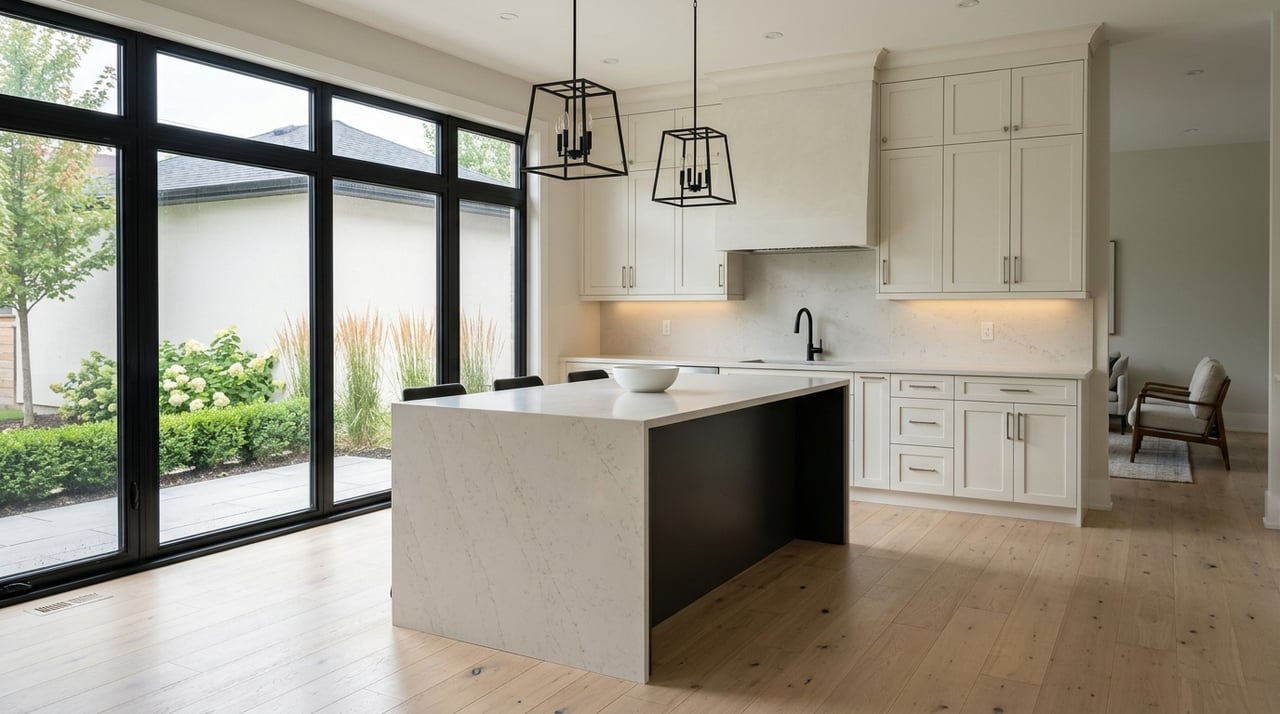
How To Analyze Mahwah Investment And REO Deals
April 16, 2026
April 16, 2026
If you are looking at an investment property or REO in Mahwah, it is easy to get distracted by the asking price and miss the numbers that really matter. In this market, a deal that looks promising on paper can get squeezed fast by property taxes, rehab costs, title issues, and a modest rent-to-price spread. The good news is that you can analyze these opportunities with a clear framework before you commit. Let’s dive in.
Before you analyze any single property, you need a realistic view of the broader Mahwah market. Right now, the numbers suggest a market that is still fairly tight, but not one where every distressed property automatically becomes a great investment.
According to Redfin’s 07430 housing market data, the median sold price in February 2026 was $526,000, down 13.1% year over year, with homes selling in about 70 days on average. Meanwhile, Realtor.com’s March 2026 snapshot cited in the research shows a median listing price of $639,900, 52 active listings, median days on market of 20, and a median rent of $2,999. Since sold data and listing data measure different moments in the market, it is smart to underwrite using a range instead of relying on one headline number.
Mahwah is not a market with a huge rental inventory relative to owner-occupied homes. Bergen County’s 2020 housing table shows that 7,661 of 9,727 occupied units in Mahwah were owner-occupied, which works out to about 78.8% owner-occupied according to Bergen County housing data.
For you as an investor, that matters. A more owner-occupied market can mean fewer direct rental comps, less predictable investor-style inventory, and a greater need to verify what tenants will realistically pay for a specific property type and condition.
One of the fastest ways to filter a Mahwah deal is to compare likely rent against your acquisition cost. If the rent does not support the purchase price, the rest of the project has very little room for error.
According to Zillow’s Mahwah rent trends, the average rent in April 2026 was $2,900 across property types, with an overall range of $2,100 to $7,100. Their bedroom-level snapshot puts average rents at $2,250 for a 1-bedroom, $2,900 for a 2-bedroom, $4,250 for a 3-bedroom, and $7,100 for a 4-bedroom.
That gives you a useful starting point, but not a shortcut. You still need to match the subject property’s size, layout, finish level, and condition to the most realistic rent band.
Mahwah deal analysis often comes down to simple math. Start with gross rent, then subtract the carrying costs that can quickly narrow your margin.
Using the current market numbers from the research report:
Those are not large cushions, especially if the property needs work. In Mahwah, buying close to retail often leaves very little room for surprises.
Property taxes should be one of the first numbers you plug into your model, not one of the last. In New Jersey, taxes can make or break an investment deal.
The 2025 New Jersey tax-rate schedule lists Mahwah Township with an effective tax rate of 1.563%. On a $526,000 purchase, that implies roughly $8,221 per year in property taxes, or about $685 per month.
If you subtract only that tax amount from $2,900 in monthly rent, you are already down to about $2,215 per month before insurance, maintenance, vacancy, property management, or financing. That is why tax pressure needs to be part of your first-pass screening.
Taxes are not just a current expense. They can also shift over time.
The township has stated that it is revaluing all taxable real estate for the 2027 tax year, which means you should stress-test your numbers for reassessment risk using the current tax framework from the state tax-rate schedule. If your margin only works under today’s assumptions, the deal may be too thin.
REO stands for real estate owned, which usually means a lender or HUD has taken title after foreclosure. These properties can create opportunity, but they also come with a different risk profile than a typical resale.
HUD explains that REO homes are sold as-is, without a warranty on condition, and buyers should inspect the property before making an offer according to the HUD glossary and REO guidance. HUD also notes that it does not provide direct rehab financing for REO properties, though FHA offers 203(k) rehab financing.
For you, that means the purchase price is only one piece of the analysis. You also need to underwrite repairs, timelines, and financing structure from day one.
New Jersey is a judicial foreclosure state, and that affects both timing and risk. The foreclosure process is not instant, and occupancy or title issues can continue even after a sale is scheduled.
According to the New Jersey Courts foreclosure guide, the lender must send a Notice of Intent to Foreclose, the borrower has 30 days to cure, the lender then files a complaint, the defendant has 35 days to answer, and if the matter is unresolved the court may issue a writ of execution for sheriff’s sale. The sheriff then has 150 days from the writ to auction the property, and the debtor has 10 days after the sale to redeem it.
This is why you should never assume immediate possession or a simple closing path on a foreclosure-related deal.
Occupied distressed properties can be especially tricky. Even if the asset seems attractive, your timeline may stretch if the property is tenant-occupied or access is delayed.
The New Jersey Courts guide notes that legitimate residential tenants may have protections under the Anti-Eviction statute. That means an occupied foreclosure or REO should be analyzed with possible notice periods, holdover risk, and delayed turnover in mind.
If your deal only works with immediate vacancy and instant rehab access, you may be taking on more risk than the numbers show.
Not every distressed-property issue comes from the foreclosure itself. In New Jersey, unpaid property taxes create their own separate title concerns.
The state’s tax sale overview explains that property taxes are a continuous lien and that municipalities sell tax sale certificates, not the property itself, when taxes are delinquent. Mahwah also notes on its tax-bill information that taxes are due quarterly and that late balances can accrue interest up to 8% on the first $1,500 and 18% above that, with possible year-end penalties on larger delinquencies.
That is why a full title search matters on any Mahwah REO or foreclosure-related purchase. A low acquisition price does not help much if curative work adds cost or delay.
Many buyers lose money on distressed deals because they guess at repairs instead of pricing them carefully. You do not need perfect numbers on day one, but you do need a grounded budget.
The statewide 2026 data from Fixr’s New Jersey kitchen remodel guide puts the average kitchen remodel at $25,830, with a broad range from $9,184 to $229,600. Labor alone often runs $6,000 to $20,700.
For bathrooms, Fixr’s New Jersey bathroom remodel data cited in the research shows an average of $13,776, with a typical range of $6,888 to $19,516. A full bath averages $8,610 to $22,960, and labor often falls between $5,510 and $8,266.
These are statewide averages, not Mahwah-specific bids. Still, they are useful for testing whether a distressed property needs light cosmetic work or a much deeper capital plan.
If the property needs work, your financing strategy should fit the rehab scope. Not every buyer wants or needs the same loan structure.
HUD says the FHA 203(k) program includes a Limited 203(k) for minor, non-structural repairs up to $75,000, while the Standard 203(k) is for larger projects and requires at least $5,000 in repairs plus a consultant. That makes 203(k) worth understanding if you are buying a Mahwah REO that needs updates before it can perform as planned.
In Mahwah, your exit plan should be clear before you close. Because rents are modest relative to pricing and taxes are meaningful, the wrong exit can erase your margin.
Based on the current local data in the research report, three common paths make the most sense:
In other words, the best Mahwah opportunities are usually the ones with a discounted basis, a disciplined scope of work, and a defined exit from the start.
Before you move forward on an investment or REO property in Mahwah, run through this quick checklist:
Mahwah can offer opportunity, especially for buyers who know how to navigate REO inventory and distressed sales. But this is not a market where loose underwriting gets forgiven.
Because the town is heavily owner-occupied, taxes are meaningful, and rent-to-price ratios are fairly modest, the deals that tend to make the most sense are the ones you buy well, repair carefully, and exit with intention. If you want a local team that understands both Bergen County market dynamics and the details behind REO and investor transactions, Michele DeStefano can help you evaluate your next move with clarity.
Stay up to date on the latest real estate trends.
Whether you’re a first-time home buyer, upsizing, downsizing or an experienced real estate investor, Michele personally ensures that all Madison Group clients are treated with the honesty, respect, and efficiency that you deserve.
Get in Touch With Our Team to Learn More
MADISON GROUP
289 Franklin Avenue Wyckoff, NJ, 07481