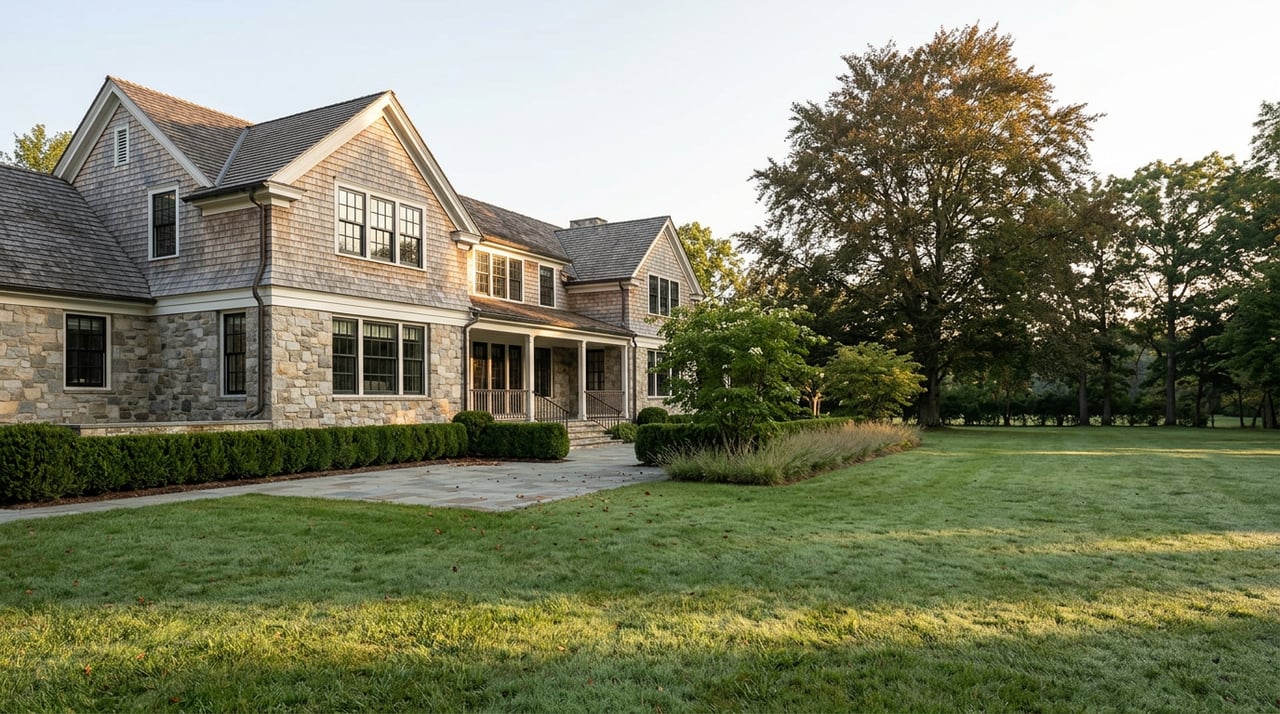
The Septic and Well Rules That Can Slow Down a Franklin Lakes Closing
September 17, 2026
September 17, 2026
Franklin Lakes home values are up. The Zillow Home Value Index put the average home in town at $1,642,902 as of August 31, 2026, a 12.7 percent jump over the year before. That kind of appreciation usually points to a market moving fast. But price growth and closing speed are not the same story here, and the gap between them has less to do with buyer demand than with what's underneath most of these lots.
Public sewer in Franklin Lakes reaches the downtown business district and stops there. Outside that small commercial core, most residential properties run on private septic systems and private wells, some on parcels as large as three acres. That single fact about infrastructure shapes almost every closing in town, because it introduces two separate regulatory processes, on two different timelines, governed by two different sets of rules. Buyers who treat this like a standard home inspection contingency are usually the ones surprised when their closing date moves.
A well and a septic system get lumped together in casual conversation, but at the closing table they behave nothing alike.
New Jersey's Private Well Testing Act requires any property with a private well to be tested at the time of a real estate transfer, with results reported to the local health department. This isn't optional and it isn't specific to Franklin Lakes. It applies statewide, and it applies every time a well-served home changes hands, according to guidance published by the Northwest Bergen Regional Health Commission, which handles water testing coordination for the area.
Septic works differently. Franklin Lakes' own septic FAQ, published by the borough, confirms that no blanket rule requires a septic inspection just because a home is being sold. An inspection can be requested by a buyer or lender, but it isn't automatic. Once one does happen, though, it stops being informal. Under state code N.J.A.C. 7:9A, if a septic inspection is completed during a property transfer, the inspecting company is required to file that report with the Board of Health. There's no quiet version of this process. A test that gets run becomes a permanent record.
Here's how the two compare at a glance:
| Requirement | Mandatory or optional | What triggers it |
|---|---|---|
| Private well test | Mandatory | Any change of ownership on a well-served property, under NJ's Private Well Testing Act |
| Septic inspection | Optional | Requested by buyer or lender; once performed, must be filed with the Board of Health |
| Cesspool replacement | Mandatory | A cesspool is identified during inspection or transfer |
| Older, non-conforming septic system | Not required to upgrade | System predates current standards but is not a cesspool |
The borough's septic FAQ draws a line that catches a lot of people off guard. State rule N.J.A.C. 7:9A requires cesspools specifically to be replaced at the time of a home sale. But the same rule explicitly does not require older septic systems, including seepage pits or traditional systems that predate current design standards, to be upgraded simply because the house is changing hands. A system can be decades old, technically out of step with what would be approved for new construction today, and still be perfectly sellable as-is, as long as it isn't a cesspool.
That's a meaningful distinction for a buyer walking into a Franklin Lakes deal expecting every older system to trigger a mandatory fix. It also means a seller with a functioning but dated septic setup isn't automatically on the hook for an upgrade they didn't budget for. The system has to actually be a cesspool, and it has to be identified as one, for the replacement requirement to apply. NJDEP's own homeowner guidance recommends that buyers secure an inspection anyway, not because the law demands it in every case, but because a functioning system today doesn't guarantee it will handle a bigger addition, a pool, or a deck down the line.
None of this is expensive or complicated in isolation. Cost estimates published earlier in 2026 put a septic inspection at roughly $300 to $500, tank locating around $25, and pumping anywhere from $380 up to $3,000 depending on how much needs to come out. None of those numbers should derail a transaction on their own.
What actually slows things down is sequencing. A well test has to go to a lab, and turnaround isn't instant. A septic inspection, if requested, produces a report that has to be filed with the Board of Health before anyone can act on it. And Franklin Lakes' own rules specify that only installers licensed by the Board of Health can perform septic repairs in the borough, which narrows the pool of contractors available if something does need fixing between inspection and closing. Stack a well test, a discretionary septic inspection, a filing requirement, and a licensed-installer bottleneck on top of a standard 30- to 45-day closing window, and it becomes clear why deals on well-and-septic properties tend to run longer than deals on sewer-and-municipal-water properties, even when the house itself is in excellent shape.
The properties that close cleanest are the ones where this work starts the day the contract is signed, not the week before closing. A practical sequence looks like this:
Do I need a septic inspection to sell my home in Franklin Lakes? Not automatically. The borough's septic FAQ confirms there's no blanket requirement. An inspection typically happens because a buyer or lender asks for one, and once it does, the report has to be filed with the Board of Health.
Is a well test really required, or can I skip it if the water looks fine? It's required. New Jersey's Private Well Testing Act applies to any private-well property at the time of transfer, regardless of how the water looks or tastes.
If my septic system is old, will I be forced to replace it before I can sell? Only if it's a cesspool. State rule N.J.A.C. 7:9A requires cesspool replacement at sale, but it explicitly does not require upgrading an older, non-conforming septic system that isn't a cesspool.
Franklin Lakes rewards buyers and sellers who plan for its infrastructure the same way they'd plan for the inspection of the house itself. The systems underground are as much a part of the transaction as the roof or the foundation, and treating them that way from day one is usually the difference between a closing that stays on schedule and one that doesn't.
If you're preparing to buy or sell on a well or septic property in Franklin Lakes, Madison Group can walk you through exactly what your specific property will trigger before it becomes a surprise at the closing table. Schedule a consultation or request a free home valuation to get started.
Stay up to date on the latest real estate trends.


Whether you’re a first-time home buyer, upsizing, downsizing or an experienced real estate investor, Michele personally ensures that all Madison Group clients are treated with the honesty, respect, and efficiency that you deserve.
Get in Touch With Our Team to Learn More
MADISON GROUP
289 Franklin Avenue Wyckoff, NJ, 07481